
Experience Serenity at the Blue Mosque
Ottoman mosque from the 1610s with six minarets and 20,000 blue İznik tiles
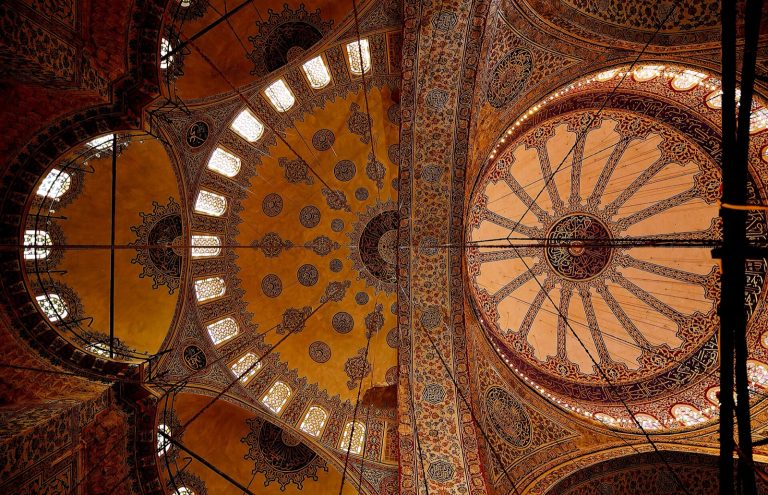
The Blue Mosque (Sultan Ahmed Mosque) was built between 1609 and 1616/17 during the reign of Sultan Ahmed I. Its popular name comes from the blue İznik tiles that line the interior, more than 20,000 of them, all handmade. It has six minarets, which is rare among Istanbul mosques, and it is still an active place of worship, so tourist visits work around the five daily prayers.
The Blue Mosque is free to visit, but it is a working mosque and closes to visitors for about an hour and a half around each prayer. Check the prayer times on the board at the entrance and come between them, ideally in the morning.
What to see
- The six minarets: rare for a mosque, and the first thing you notice from Sultanahmet Square.
- The İznik tiles: more than twenty thousand hand-made tiles with tulips, roses and cypress trees, mostly in shades of blue, which give the mosque its popular name.
- The great prayer hall: a cascade of domes and half-domes lit by more than two hundred windows.
- The courtyard: as large as the prayer hall itself, with a fine central fountain. Step back for the best photo of the domes.
- The Hippodrome: right next door, the old Byzantine racecourse with the Egyptian Obelisk of Theodosius, the Serpentine Column and the German Fountain.
The mosque was built between 1609 and 1616/17 for Sultan Ahmed I by the architect Sedefkâr Mehmed Ağa, a student of the great Mimar Sinan. Its official name is the Sultan Ahmed Mosque (Sultanahmet Camii).
Visiting tips
- Use the separate visitors’ entrance and follow the signs; worshippers use a different door.
- Dress code: shoulders and knees covered, women cover their hair. Scarves and wraps are usually lent at the entrance.
- Shoes off: bags are provided for your shoes.
- Avoid Friday mornings: on Fridays visitors are usually let in only after the midday prayer, from early afternoon.
- Be quiet and respectful; photos are fine, but not of people praying.
What’s nearby
Hagia Sophia stands opposite across the square, and the Basilica Cistern and Topkapı Palace are a few minutes away. Behind the mosque, the Arasta Bazaar is a quiet place to shop for ceramics and textiles.
Blue Mosque: frequently asked questions
Is the Blue Mosque free to enter?
Yes. There is no entry fee, though donations are welcome. Visitors enter outside prayer times through the visitors’ entrance.
Why is it called the Blue Mosque?
Because of the thousands of blue İznik tiles that decorate the inside. Its official name is the Sultan Ahmed Mosque (Sultanahmet Camii).
What should I wear to the Blue Mosque?
Cover your shoulders and knees; women cover their hair. Wraps and scarves are usually available at the entrance, and everyone takes off their shoes.
When is the Blue Mosque closed to visitors?
During the five daily prayers, for about an hour and a half each time, and for longer at Friday noon prayers. Mornings are usually the easiest time to visit.
Book tours & tickets
🎟️ See Blue Mosque & old city tours →Free cancellation on most tours · secure booking with GetYourGuide
Photos: Benh LIEU SONG (Flickr), CC BY-SA 3.0; Laurens R. Krol, CC BY 4.0, via Wikimedia Commons
No visitor reviews for this place yet. Have you been here? Rate it and help other travellers.
Share your experience →Share your memories and tips with other travellers. Your story will appear on our blog with your name.