
Perge: Visiting the Ancient City near Antalya
Gates, colonnaded streets and a stadium, a short drive east of Antalya
In short: Perge is an ancient city in the Aksu district of Antalya province, 17 km east of Antalya city centre according to the Ministry of Culture and Tourism. You walk in through a Roman gate and past the round Hellenistic towers, then along a long colonnaded street with a water channel down its middle. Excavations began in 1946, and work at the site still goes on.
Last checked: 13 November 2026. Opening hours change with the season, so check the official museum website before you go. We don’t list ticket prices.
What to see
The Ministry of Culture and Tourism lists these remains at Perge:
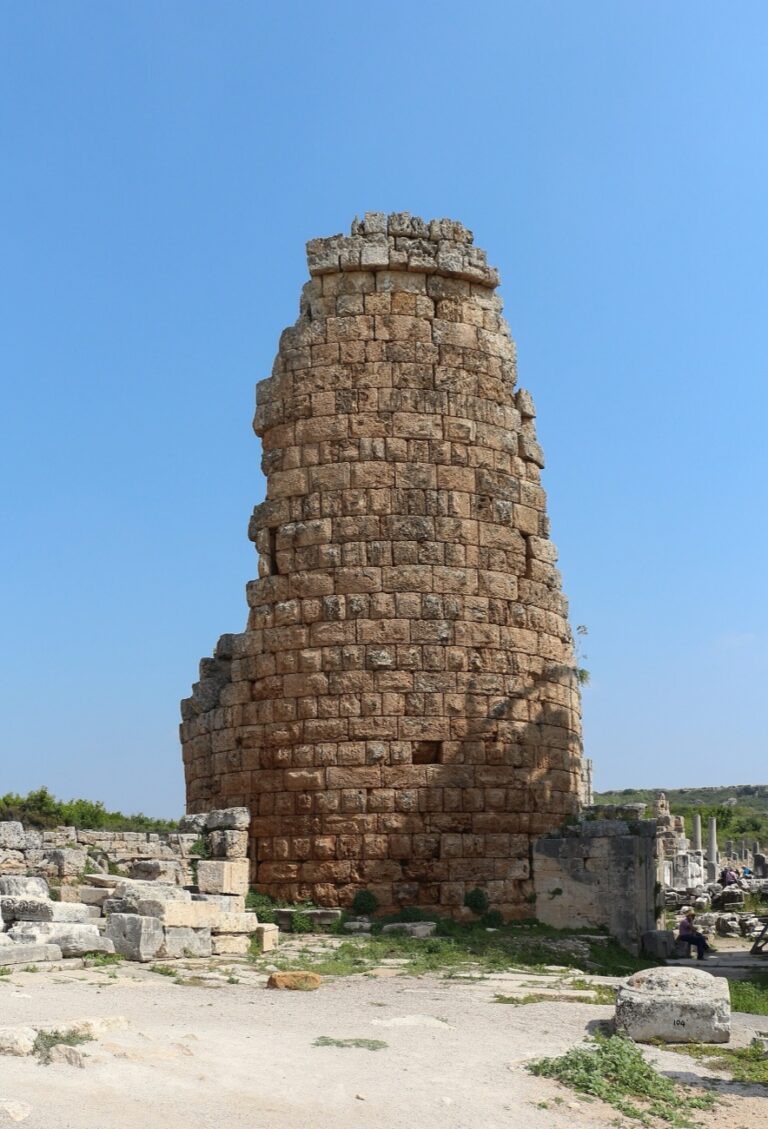
- The Roman gate and the Hellenistic towers: two round towers from the 3rd century BC stand behind the Roman city gate. In the 2nd century AD a local benefactress and priestess, Plancia Magna, rebuilt the courtyard behind the towers and filled it with statues.
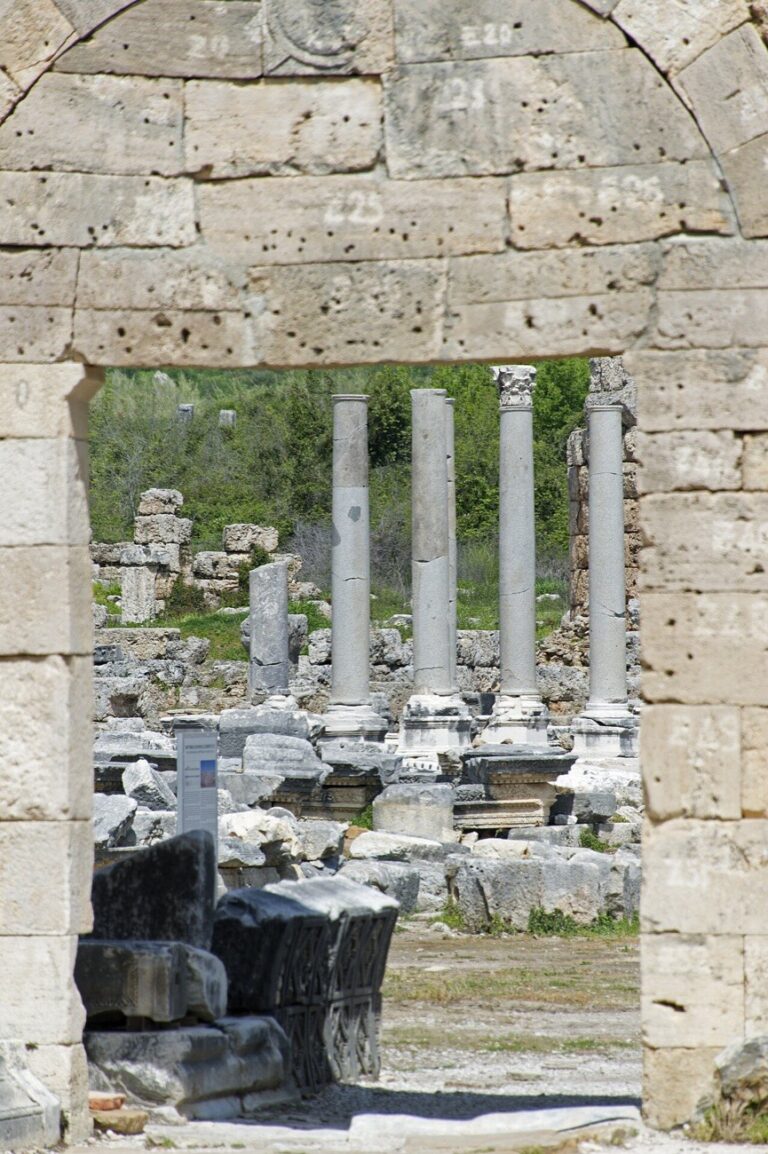
- The colonnaded street: the main street is lined with columns and has a water channel running down the centre.
- The agora and baths: the market square (agora and macellum), the palaestra and the Southern Bath.
- Fountains: the Kestros Fountain and a monumental fountain (nymphaeum).
- The theatre and the stadium: excavation of the stadium arena was completed in 2024. Research published in 2026 found that the stadium was turned into an amphitheatre-style arena in the 3rd century AD.
- Basilicas and the necropolis: large churches from the Christian period and the Western Necropolis outside the city.
History in brief
- St Paul: according to the Book of Acts, Paul and Barnabas came to Perge from Cyprus and went on to Pisidian Antioch (Acts 13:13–14). On the way back they preached in Perge before going down to Attalia, today’s Antalya (Acts 14:25).
- Excavations: excavations began in 1946 under Arif Müfid Mansel of Istanbul University. Since 2012 they have been run by the Antalya Museum Directorate.
- Recent finds: in 2025 excavators found five statues, including an Aphrodite with Eros on a dolphin.
- UNESCO: the “Archaeological Site of Perge” has been on UNESCO’s Tentative List since 2009. It is not yet a World Heritage Site.
- Statues from Perge: many were shown in the Antalya Museum, which has been closed for rebuilding since July 2025. See our Antalya Museum page.
Visiting
- Opening hours: on 13 November 2026 the official museum website listed winter hours (1 November to 30 April) of 08:00 to 17:00 every day, with last entry at 16:30. Summer hours are longer, so check before you go.
- Museum Pass: the site is covered by the Museum Pass The Mediterranean.
- Getting there: most visitors come by car, taxi or on a tour. By public transport, take the tram line towards Aksu and Expo, then a short taxi ride or walk.
- Combine it with Aspendos: Perge and Aspendos are often visited on the same day.
- Tips: the site is large and flat with little shade, so go early in summer, bring water and a hat, and wear comfortable shoes.
Planning your trip? See our Antalya travel guide, day trips from Antalya and the best time to visit Turkey.
Sources we checked (November 2026): Ministry of Culture and Tourism: Perge Archaeological Site · UNESCO Tentative List: Archaeological Site of Perge · Daily Sabah: stadium excavation completed · Anadolu Agency: top archaeological finds of 2025 · Istanbul University: stadium-amphitheatre report · Hürriyet: Perge (Turkish) · Hürriyet Daily News: Antalya Museum closed · Acts 13:13–14
Perge: questions
How far is Perge from Antalya?
17 km east of Antalya city centre, in the Aksu district, according to the Ministry of Culture and Tourism.
What are Perge’s winter opening hours?
On 13 November 2026 the official museum website listed 08:00 to 17:00 every day from 1 November to 30 April, with last entry at 16:30.
Is Perge covered by the Museum Pass?
Yes, it is covered by the Museum Pass The Mediterranean.
Did St Paul visit Perge?
Yes. According to Acts 13 and 14, Paul and Barnabas passed through Perge and preached there.
Is Perge a UNESCO World Heritage Site?
Not yet. It has been on UNESCO’s Tentative List since 2009.
Header photo: columns along the main street of Perge. Photo: Bernard Gagnon, CC BY-SA 3.0, via Wikimedia Commons (resized).
No visitor reviews for this place yet. Have you been here? Rate it and help other travellers.
Share your experience →Share your memories and tips with other travellers. Your story will appear on our blog with your name.