
Pamukkale Travel Guide
Snow-white travertine terraces, warm mineral pools and the Roman spa city of Hierapolis
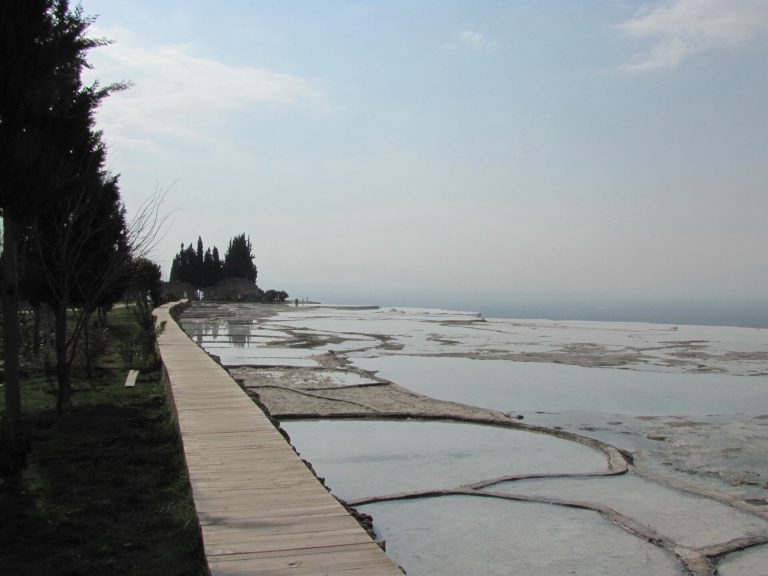
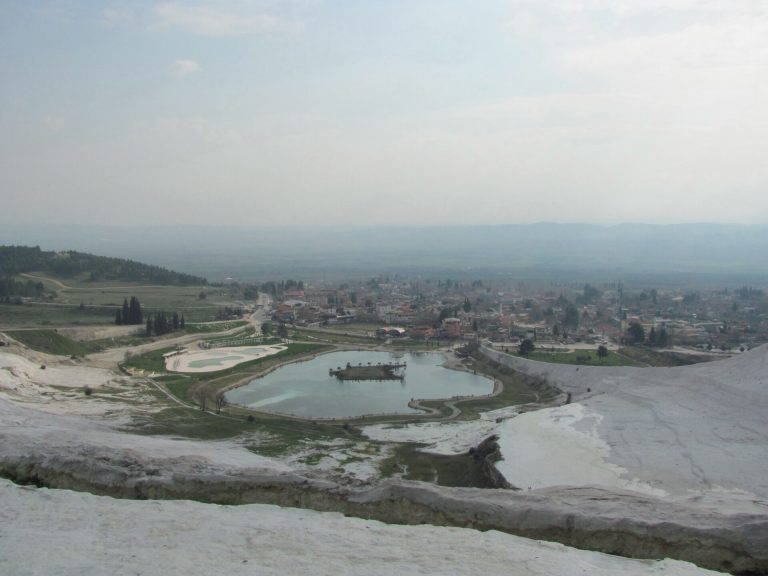
Pamukkale means “cotton castle” in Turkish, and from a distance the hillside really does look like snow. For thousands of years, warm, calcium-rich spring water has flowed down the slope and left behind white terraces and shallow turquoise pools. On top of the hill lie the ruins of Hierapolis, a Roman spa city with a great theatre and a huge necropolis. Together they form a UNESCO World Heritage Site and one of the most unusual sights in Turkey.
🗺️ Plan your visit: Where to stay in Turkey · Antalya · İzmir & Ephesus
Top things to do
- Walk the travertines: follow the marked path up the white terraces. To protect them, shoes are not allowed on the travertines, so you walk barefoot through the warm, shallow water.
- Hierapolis: explore the colonnaded street, the city gates, the baths and one of the largest ancient cemeteries in Turkey.
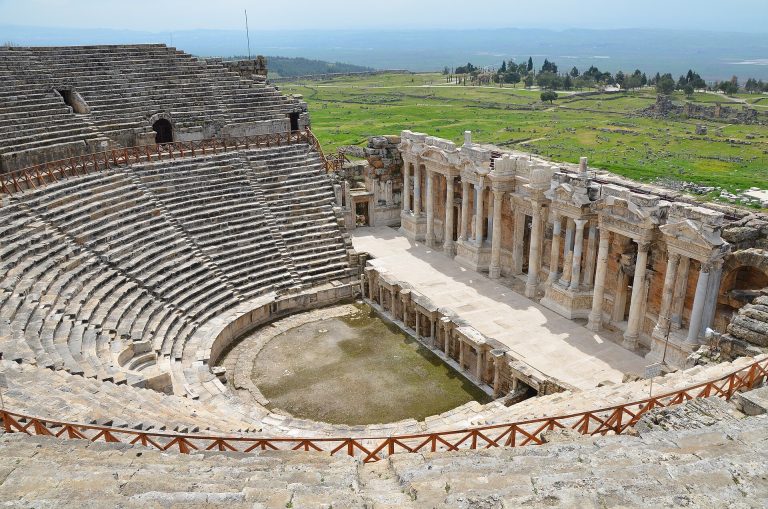
- The Roman theatre: high above the terraces, with a beautifully preserved stage building and wide views over the valley.
- The Antique Pool: swim in warm mineral water among fallen marble columns. It has its own entrance fee, separate from the main site.
- Karahayıt: a nearby village known for its red-coloured thermal springs and spa hotels.
Practical tips
- Go early or late: mornings and the hour before sunset are cooler, quieter and more beautiful for photos. The terraces glow pink at sunset.
- Bring: a bag for your shoes, sun cream, sunglasses (the white rock is bright), water and swimwear if you want to use the pools.
- Allow time: half a day for the terraces and Hierapolis, a full day if you also swim in the Antique Pool and explore slowly.
- Tickets: there is an entrance fee for the site and a separate one for the Antique Pool. Prices change, so check them on arrival.
Ancient Hierapolis
- The theatre: a large, well-preserved Roman theatre above the terraces.
- The necropolis: one of the largest ancient cemeteries in Turkey, with hundreds of tombs.
- The Antique Pool: warm thermal water with ancient columns under the surface (separate fee).
- Hierapolis Museum: statues and finds from the city, in the old Roman baths.
Day trips and tours
Many visitors combine Pamukkale with Aphrodisias, a beautiful ancient city about 1.5 hours away, or with a hot air balloon flight over the terraces at sunrise.
Getting there
- From the coast: Pamukkale is a popular day trip from Fethiye, Marmaris, Bodrum, Kuşadası and Antalya, usually three to four hours each way by road. Many visitors stay one night to enjoy it without rushing.
- Nearest city: Denizli, about 20 km away, with a bus station, trains and an airport with domestic flights.
- Tours and transfers: organised day tours and private transfers run from the main resorts.
Advertise with us →
When to go
Spring and autumn are the most pleasant seasons: comfortable temperatures and softer light. Summer is very hot on the white rock, so go early. In winter the warm water steams in the cold air, which makes for magical photos.
Photos via Wikimedia Commons: Travertine terraces – Pamukkale, Denizli Province, Turkey – October 6, by Giorgio Galeotti, CC BY-SA 4.0; The travertines of Pamukkale 2 by Slyronit, CC BY-SA 4.0; Lake of Pamukkale seen from the travertines by Slyronit, CC BY-SA 4.0; The Roman theatre, built in the 2nd century AD under Hadrian on the ru by Carole Raddato, CC BY-SA 2.0.
What visitors say
From recent traveller reviews, these are the tips people wish they had known:
- Bring a bag for your shoes. Shoes are not allowed on the white terraces, so you walk barefoot and carry your shoes; slip-on sandals make this easy.
- Avoid the middle of the day. Tour groups arrive roughly between 11 am and 4 pm. Early morning is cooler and quieter, and late afternoon brings golden light and sunset colours on the terraces.
- See Hierapolis first, then the terraces. Explore the ancient city in comfortable shoes, then cool your feet in the warm pools on the way down.
- Give it time. Most visitors say half a day is the minimum; with the museum, the theatre and the Antique Pool, plan for a full day or stay overnight in Pamukkale village.
- The Antique Pool costs extra and can be busy; go early if you want to swim among the ancient columns.
- Sun and glare: the white rock reflects the sun strongly, so bring sunglasses, a hat and water.
Pamukkale: frequently asked questions
Can you walk on the Pamukkale travertines?
Yes, but only barefoot and on the permitted paths, to protect the white terraces.
How much time do I need in Pamukkale?
Half a day for the travertines and Hierapolis; a full day if you also swim in the Antique Pool or visit nearby sites.
Can I visit Pamukkale on a day trip?
Yes, day tours run from Antalya, Fethiye, Marmaris, Bodrum and Kuşadası, but they involve long drives.
When is the best time to visit Pamukkale?
Spring and autumn; go early in the morning or late in the afternoon to avoid the heat and crowds.
Book tours & tickets for Pamukkale
🎟️ See all tours →Free cancellation on most tours · secure booking with GetYourGuide
Header photo: White terraces of Pamukkale by A.Savin, Free Art License, via Wikimedia Commons.
No visitor reviews for this place yet. Have you been here? Rate it and help other travellers.
Share your experience →Share your memories and tips with other travellers. Your story will appear on our blog with your name.