
Ancient Kaunos: Rock Tombs and a Lost Harbour across the River from Dalyan
A Carian port city, its temple-fronted tombs and a short boat ride from the village
In short: the famous rock tombs of Dalyan, carved into the cliff above the river in the 4th century BC, belong to the ancient city of Kaunos. You can admire them from the Dalyan riverside, then cross the river by small rowing boat to Çandır and walk about 20 minutes to the ruins: a theatre, baths, a basilica, city walls and the old harbour, now silted up. Kaunos is on UNESCO’s tentative World Heritage list.
Last checked: 10 November 2026. Check opening times on the day; boat fares change.
A Carian port city
Kaunos was an important trading port in Caria, the region ruled in the 4th century BC by the famous satrap Mausolus of Halicarnassus (Bodrum). Over the centuries the river carried so much silt that the sea retreated and the city lost its harbour, which is one reason it was abandoned. Parts of the city walls date back to the Archaic period, with later walls from the time of Mausolus and the Hellenistic era.
What to see
- The rock tombs: temple-fronted tombs cut into the cliff in the 4th century BC and reused in Roman times. They are best seen from the Dalyan riverside and from the river boats, especially in the warm light of late afternoon.
- The acropolis: the 152-metre hill at the heart of the city, with views over the reed beds, the river and the sea.
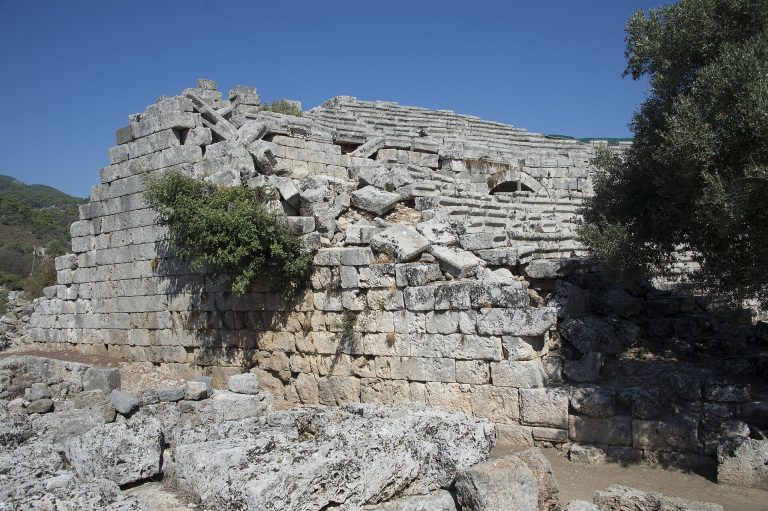
- The theatre: at the foot of the acropolis, the best-preserved building on the site.
- Baths, temple and basilica: the remains of a Roman bath and temple, and a basilica-type church west of the theatre.
- The old harbour: once open to the sea, now a small lake in the marshes. Look for the cavities in the rocks where fires were lit to guide ships into port.
Getting there
- Rowing-boat crossing: small boats ferry visitors across the river from Dalyan to the Çandır side; from there it is about a 20-minute walk to the ruins. Agree the return time with the boatman.
- River boat tours: many day trips from Dalyan stop at Kaunos, together with the mud baths and İztuzu beach.
- From Dalyan village: see our Dalyan guide for getting there from Dalaman airport and Fethiye.
Visiting tips
- Opening hours: usually from 08:30 into the early evening in summer and shorter in winter; check the official museum website before you go.
- Bring: water, a hat and good shoes; the site is spread over a hillside with little shade.
- Best light: the tombs glow in the late-afternoon sun, so many visitors see the ruins in the morning and the tombs from the river at sunset.
What real travellers say
- “The tombs are magical at sunset.” The view from the riverside cafés is a highlight of Dalyan.
- “Worth crossing the river.” Visitors who walk up to the ruins enjoy the quiet theatre and the views.
- “Combine it with İztuzu.” A boat day often links Kaunos, the mud baths and the turtle beach.
Summarised in our own words from travel guides and holidaymaker reviews. We don’t list prices because they change often.
Sources we checked (November 2026): Go Türkiye: Muğla, Kaunos rock tombs · Kültür Envanteri: Kaunos · Lonely Planet: Kaunos · NTV: Kaunos (Turkish)
Kaunos: questions
Are the Dalyan rock tombs part of Kaunos?
Yes. The temple-fronted tombs in the cliff above the river belong to ancient Kaunos and date from the 4th century BC.
How do I get to Kaunos from Dalyan?
Cross the river by small rowing boat to the Çandır side, then walk about 20 minutes, or join a river boat tour that stops there.
Was Kaunos Lycian or Carian?
Kaunos was a Carian city, close to the border with Lycia.
Header photo: the rock tombs of Kaunos. Photo: Rev Stan from London, UK, CC BY 2.0, via Wikimedia Commons
No visitor reviews for this place yet. Have you been here? Rate it and help other travellers.
Share your experience →Share your memories and tips with other travellers. Your story will appear on our blog with your name.