
Xanthos and Letoon: A UNESCO Day Trip from Fethiye
The capital of ancient Lycia and its sacred sanctuary, 4 km apart in the Eşen valley
In short: Xanthos, near the village of Kınık about 46 km from Fethiye, was the greatest city of ancient Lycia. Letoon, 4 km away near Kumluova, was the league’s holy sanctuary, with three temples side by side. Together they have been a UNESCO World Heritage Site since 1988. They are easy to combine in half a day, often with Patara beach.
Last checked: 10 November 2026. Opening hours change between summer and winter; check the official museum website before you go.
Xanthos: the capital of Lycia
Xanthos was the largest administrative centre of ancient Lycia and, in the 2nd century BC, became the capital of the Lycian League. Its history was dramatic: it fell to the Persians in 546–545 BC and, according to the ancient historian Herodotus, its people chose to die rather than surrender. The city was rebuilt and stayed important under the Romans and Byzantines until the Arab raids of the 7th century. Xanthos lies just inside Antalya province, while Letoon is in Muğla.
- The Harpy Tomb and pillar tombs: tall Lycian tombs standing on stone pillars next to the theatre, the most photographed sight of Xanthos. The reliefs you see are copies; many original sculptures from Xanthos, including the Nereid Monument, were taken to the British Museum in London in the 19th century.
- The Roman theatre and agora: right beside the pillar tombs.
- The inscribed pillar: a monument covered in a long inscription in the Lycian language.
- The view: the city sits above the Eşen river, with the valley and the mountains around it.
Letoon: the sanctuary of Leto
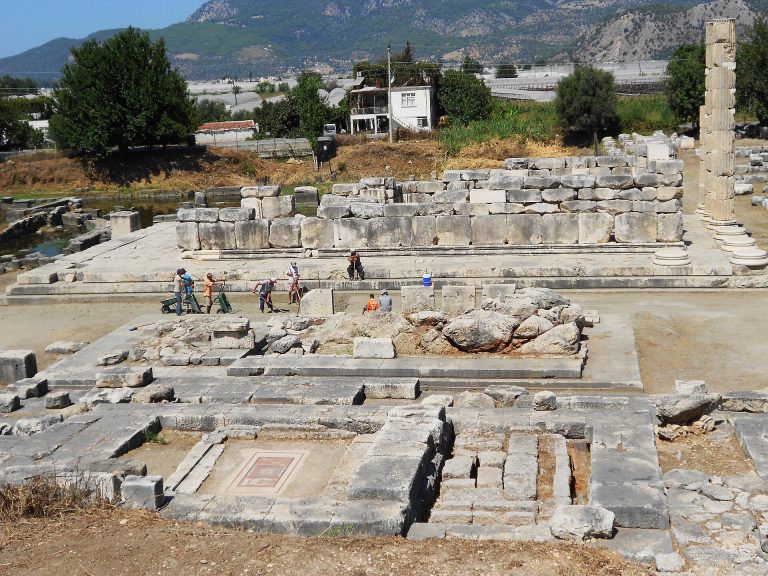
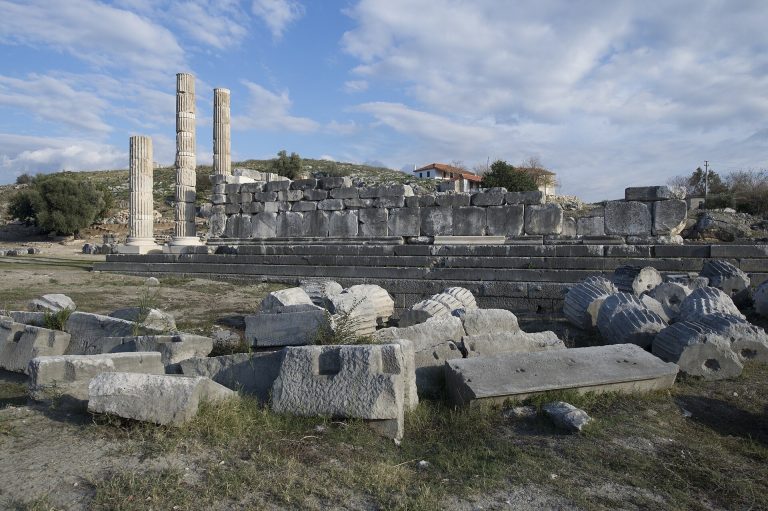
Founded in the 7th century BC, Letoon became the religious sanctuary of the Lycian League. Its three temples stand side by side: the largest, in the Ionic style, for the goddess Leto, and smaller ones for her twin children Artemis and Apollo. Next to them is a nymphaeum (a monumental fountain) built over a sacred spring; much of it now lies under water. There is also a Hellenistic theatre and a 6th-century Byzantine church, abandoned in the 7th century.
Letoon is famous for the trilingual inscription found near the temples, written in Lycian, Greek and Aramaic. It helped scholars understand the Lycian language.
Visiting tips
- Opening hours: the official listings give 08:30 to about 19:00 in summer at Xanthos (19:30 at Letoon) and 08:30 to 17:30 in winter at both. Ticket offices close earlier, so check the official museum website before you go.
- Order: many visitors see Xanthos first, then drive the few minutes to Letoon, and end the day at Patara beach.
- Bring: water, a hat and good shoes; both sites have little shade in summer.
- Time needed: about an hour at each site.
Getting there
- By car: about 46 km from Fethiye on the road towards Kalkan and Kaş; Xanthos is near Kınık, and Letoon is signposted from the road.
- By tour: some day tours from Fethiye combine Xanthos, Letoon, Saklıkent or Patara.
- Nearby: Tlos and Saklıkent Gorge are in the same valley.
What real travellers say
- “Quiet and atmospheric.” Many are surprised how few people they meet at such important sites.
- “Combine it with Patara.” History in the morning, a long sandy beach in the afternoon.
- “Read up before you go.” Knowing the story makes the ruins come alive.
Summarised in our own words from travel guides and holidaymaker reviews. We don’t list prices because they change often.
Book tours & tickets
🎟️ See all tours →Free cancellation on most tours · secure booking with GetYourGuide
Sources we checked (November 2026): Turkish Museums: Letoon · Go Türkiye: Xanthos–Letoon · UNESCO: Xanthos-Letoon
Xanthos and Letoon: questions
How far are Xanthos and Letoon from Fethiye?
Xanthos is about 46 km from Fethiye, and Letoon is about 4 km from Xanthos.
Are Xanthos and Letoon a UNESCO site?
Yes, together they have been on the UNESCO World Heritage List since 1988.
Can I combine them with Patara?
Yes. Patara beach and ancient city are a short drive away, and many visitors end the day there.
Header photo: the Harpy Tomb and a pillar tomb at Xanthos. Photo: Josep M. Gracia, CC BY-SA 4.0, via Wikimedia Commons
No visitor reviews for this place yet. Have you been here? Rate it and help other travellers.
Share your experience →Share your memories and tips with other travellers. Your story will appear on our blog with your name.