
Gordion: King Midas’s Capital, a Day Trip from Ankara
The Phrygian capital, the great Midas Mound and the Gordian Knot
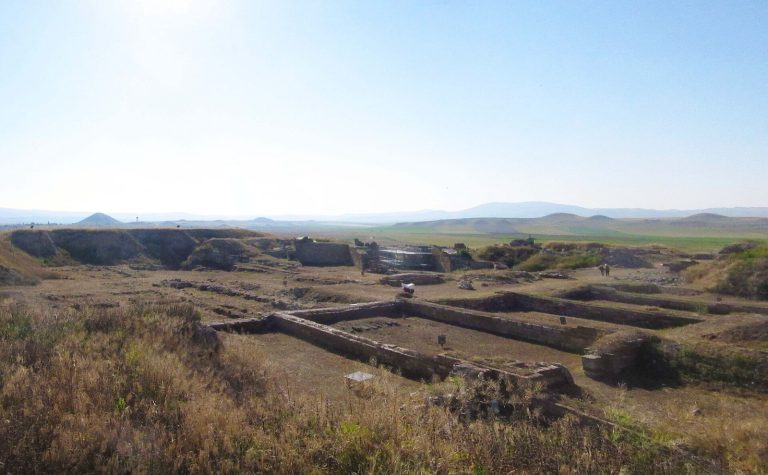
In short: Gordion was the capital of ancient Phrygia, at its height in the Iron Age (about 900–600 BC). It lies at the village of Yassıhöyük in Polatlı district, west of Ankara, near where the Sakarya and Porsuk rivers meet. Its most famous monument is the great Tumulus MM, the “Midas Mound”. It is also the city of the Gordian Knot. Gordion was added to the UNESCO World Heritage List in September 2023.
Last checked: 11 November 2026. Opening hours: check before you go. We don’t list prices.
Why Gordion matters
- Capital of Phrygia: the Phrygian kingdom, home of the legendary King Midas, flourished here in the Iron Age, roughly 900–600 BC.
- UNESCO: inscribed on the World Heritage List in September 2023, at the extended 45th session of the World Heritage Committee in Riyadh.
- Excavations: the Penn Museum (University of Pennsylvania) has excavated here since 1950, first under Rodney S. Young, and the project continues today.
The Midas Mound (Tumulus MM)
- Size: the great burial mound still rises more than 50 m and is about 300 m across.
- Date: tree-ring dating of its wooden tomb chamber gives a date of about 740 BC.
- Whose tomb? Despite the name, that date suggests it belonged to a ruler before Midas, probably his father Gordias, rather than Midas himself.
- Many more mounds: many other Phrygian burial mounds surround the ancient citadel.
The Gordian Knot
According to legend, whoever could undo the knot tied to an ancient wagon at Gordion would rule Asia. In 333 BC Alexander the Great came here and, in the best-known version of the story, cut through it with his sword; some ancient writers say he simply loosened it.
Visiting
- Gordion Museum: in Yassıhöyük village, opposite the great mound, with an open-air display area.
- In Ankara: many of the finest Gordion finds, including inlaid wooden furniture from the Midas Mound, are in the Museum of Anatolian Civilizations.
- Getting there: Gordion is near the town of Polatlı, west of Ankara. Sources give different distances from the city, so allow most of a day for the trip.
Sources we checked (November 2026): Penn Museum: Gordion on the UNESCO list · Turkish Ministry of Foreign Affairs: Gordion inscription · Wikipedia: Gordion · Wikipedia: Gordion Museum · Daily Sabah: a day in Gordion · Go Türkiye: Anatolian civilizations in Ankara
Gordion: questions
Is the Midas Mound really King Midas’s tomb?
Probably not. Tree-ring dating puts the tomb at about 740 BC, which suggests it belonged to an earlier ruler, probably Midas’s father Gordias.
When did Gordion become a UNESCO site?
In September 2023, at the extended 45th session of the World Heritage Committee in Riyadh.
Where is Gordion?
At the village of Yassıhöyük in Polatlı district, west of Ankara, near where the Sakarya and Porsuk rivers meet.
What is the Gordian Knot?
A legendary knot at Gordion: whoever undid it would rule Asia. Alexander the Great came here in 333 BC and, in the best-known version, cut it with his sword.
Header photo: the Midas Mound (Tumulus MM). Photo: Carole Raddato, CC BY-SA 2.0, via Wikimedia Commons (resized).
No visitor reviews for this place yet. Have you been here? Rate it and help other travellers.
Share your experience →Share your memories and tips with other travellers. Your story will appear on our blog with your name.