
Kars Travel Guide: Ani, Kars Castle and the Snowy East
A border city of basalt, Russian-era streets and a UNESCO ghost city
In short: Kars is a high plateau city in north-eastern Türkiye, on the border with Armenia, at about 1,770 m. It is the end of the line for the Touristic Eastern Express from Ankara and the base for visiting Ani, a medieval ghost city on the UNESCO World Heritage List since 2016. Kars was under Russian rule from 1878 to 1918, which left it with grid-plan streets of dark basalt buildings. Winters are very cold and snowy; spring and summer turn the plateau green.
Last checked: 11 November 2026. Opening hours change, so check before you go. We don’t list prices.
Ani: the ghost city
Read our full walking guide to Ani.
- Where: about 42–44 km east of Kars, on a plateau above the Arpaçay (Akhurian) river, which forms the border with Armenia. It is the largest archaeological site in Eastern Anatolia.
- UNESCO: inscribed on the World Heritage List on 15 July 2016.
- History: capital of the Bagratid Armenian kingdom from 961 to 1045, then taken by the Seljuks under Alp Arslan in 1064. It was a stop on the Silk Road.
- Walls and gate: the city walls run for about 4.5 km, and visitors enter through the Lion (Middle) Gate.
- The Cathedral: built around 990–1010 and later used as the Fethiye Mosque. It is the best-preserved building on the site, though it has lost its dome.
- Church of St Gregory of Tigran Honents: dating from 1215 and known for its frescoes.
- Ebu’l Menuçehr Mosque: from 1072. Turkish sources describe it as the first Turkish mosque in Anatolia.
- Also on the site: the Abughamrents and St Prkich churches, a Seljuk caravanserai, the remains of the Silk Road bridge and the Seljuk palace.
Things to do in Kars city
Follow our Kars walking tour for the castle, Kümbet Mosque and the Russian-era town.
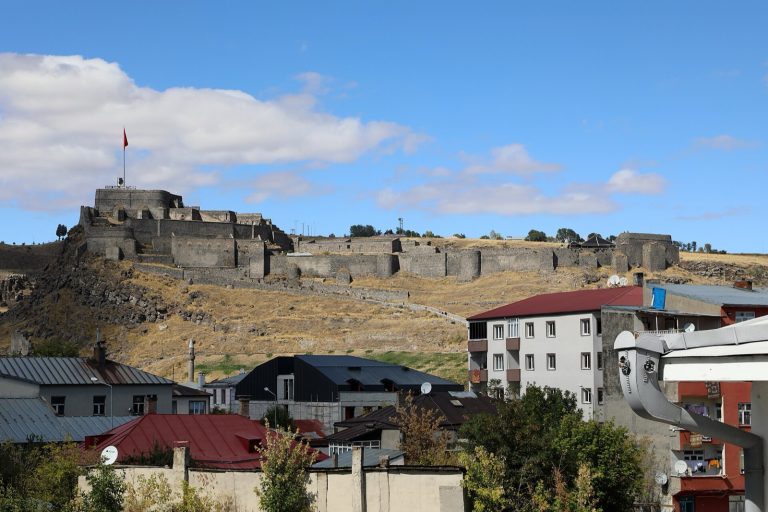
- Kars Castle: a basalt castle on the hill above the old town, dating from the 12th century and rebuilt several times. It holds the tomb of Celal Baba.
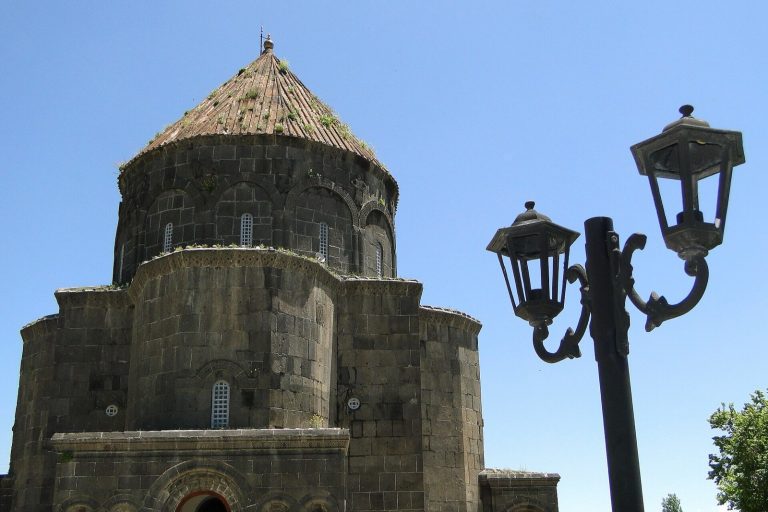
- Kümbet Mosque (Church of the Holy Apostles): built in 932–937 below the castle, with twelve figures carved around its drum. Over the centuries it has served as a church and a mosque.
- Russian-era “Baltic” architecture: more than 150 dark basalt buildings on a grid plan, in the Yusufpaşa, Ortakapı and Cumhuriyet districts. Among them are the Governor’s Mansion and the Chamber of Commerce.
- Fethiye Mosque: a former Russian church, which became a mosque in the 1980s.
- Kars Museum: archaeology, including many finds from Ani, and ethnography.
- Kars Cheese Museum: said to be Türkiye’s first cheese museum.
- Old stone bridge: an Ottoman basalt bridge (Taş Köprü) over the Kars stream below the castle.
Around Kars
- Sarıkamış (Cıbıltepe) ski resort: about 55 km south-west of Kars, with runs through Scots pine forest. It is famous for dry “crystal” snow. The season is roughly December to March.
- Sarıkamış memorial: tens of thousands of Ottoman soldiers died, many of them from the cold, in the Sarıkamış operation of December 1914 to January 1915. A martyrs’ memorial stands in the Allahuekber Mountains.
- Lake Kuyucuk: a Ramsar wetland since 2009, the first in eastern Türkiye, with a bird-ringing station and more than 200 recorded bird species.
- Lake Çıldır: on the Kars–Ardahan border, famous for horse-drawn sleigh rides on the frozen lake in winter.
Food and local products
- Kars kaşarı: a registered Turkish geographical indication (2015). An EU application was made in 2026.
- Kars gravyer: registered as a Turkish geographical indication in September 2024. Both cheeses are made from the milk of cows grazing on the high plateau.
- Kars goose: geese are dried or salted for winter and served roasted, often with bulgur pilaf.
- Honey: beekeeping is important here thanks to the plateau’s wild flowers.
- Hand-knotted Kars carpets: a registered geographical indication product.
Getting there
- By air: Kars Harakani Airport is about 6 km from the centre, with flights from Istanbul and Ankara.
- By train: the regular Eastern Express runs daily from Ankara, and the Touristic Eastern Express runs in winter with sightseeing stops.
- To Ani: by car or tour along rural roads from Kars.
When to go, and a book to read
Winter (about December to March) is for snow, the touristic train, sleighs on Lake Çıldır and skiing at Sarıkamış; dress for serious cold. Late spring and summer are greener and easier for walking around Ani. Before you go, you might read Orhan Pamuk’s novel Snow (Kar, 2002), which is set in a snowbound Kars.
Sources we checked (November 2026): Go Türkiye: Kars · Go Türkiye: things to see in Kars · Go Türkiye: Kars food · Wikipedia: Kars · Wikipedia: Ani · Ministry museums portal: Ani · Ministry of Culture and Tourism: Kars · Daily Sabah: Discover Kars · Daily Sabah: Ani · Hürriyet Daily News: Baltic architecture · Hürriyet Daily News: cheese museum · Hürriyet Daily News: Kars kaşar · Daily Sabah: Kars gravyer · Ministry: Sarıkamış · Hürriyet Daily News: crystal snow · Ramsar: Lake Kuyucuk · Wikipedia: Kars Harakani Airport · Wikipedia: Snow (novel)
Kars: questions
How far is Ani from Kars?
About 42–44 km east of the city, on the Armenian border. Ani has been a UNESCO World Heritage Site since 2016.
Why do buildings in Kars look Russian?
Kars was under Russian rule from 1878 to 1918. More than 150 basalt buildings from that time, often called “Baltic-style”, line its grid-plan streets.
What food is Kars famous for?
Kars kaşar and gravyer cheeses (both registered geographical indications), roast goose and plateau honey.
How do I get to Kars?
Fly to Kars Harakani Airport from Istanbul or Ankara, or take the Eastern Express train from Ankara; the Touristic Eastern Express runs in winter.
Is there skiing near Kars?
Yes. Sarıkamış (Cıbıltepe), about 55 km away, is known for dry “crystal” snow and pine-forest runs, roughly December to March.
Header photo: the Cathedral of Ani. Photo: Panegyrics of Granovetter, CC BY-SA 2.0, via Wikimedia Commons (resized).
No visitor reviews for this place yet. Have you been here? Rate it and help other travellers.
Share your experience →Share your memories and tips with other travellers. Your story will appear on our blog with your name.